4 months
Product delivery

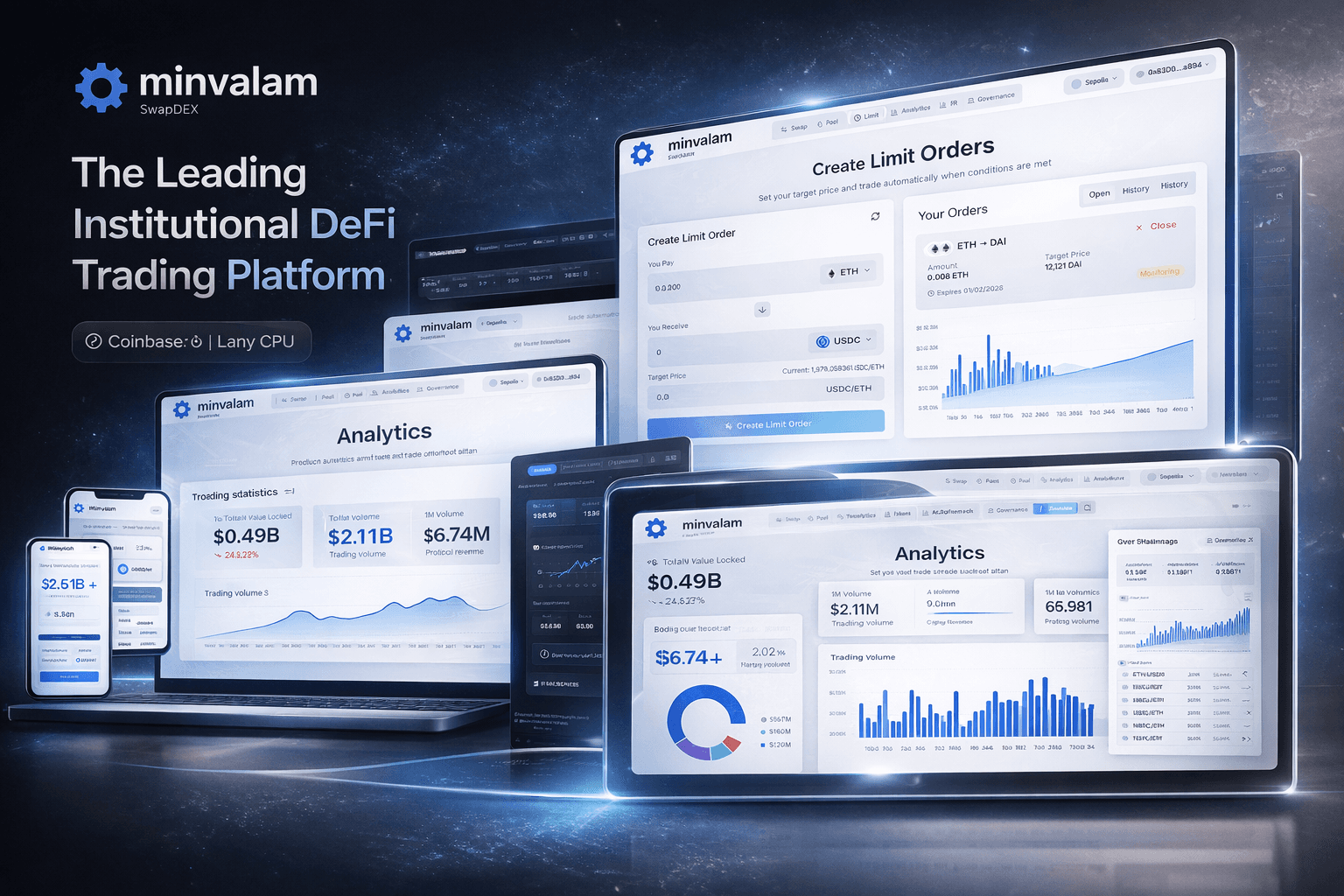
SwapDEX is a crypto swap platform concept designed around wallet-connected trading, token swaps, blockchain transaction visibility, liquidity workflows, and a secure Web3 portfolio experience.
4 months
8 engineers + blockchain architect
DeFi / Decentralized Exchange
4 months
Product delivery
8+
Engineers involved
6
Core product capabilities
24/7
Transaction visibility
Project overview
SwapDEX is a decentralized exchange concept focused on simplifying crypto trading workflows across wallet connection, token selection, swaps, transaction confirmation, and portfolio activity.
Instead of treating wallet connection, token selection, transaction confirmation, and portfolio information as separate technical features, the product experience connects them into one continuous trading journey.
The result is a foundation that can support future DeFi capabilities while keeping the core experience focused and understandable.
Crypto DEX development
A decentralized exchange allows users to interact with digital assets through blockchain networks, connected wallets, and smart contract-based workflows. Unlike a traditional centralized exchange, the product experience needs to make wallet state, transaction status, network fees, token balances, and confirmations understandable to users.
Users interact with the application through compatible Web3 wallets instead of relying only on traditional account-based trading flows.
Trading actions can involve blockchain transactions that move through signing, pending, confirmation, failure, or rejection states.
DEX products can combine trading, liquidity, portfolio, token, and analytics experiences into one Web3 product.
The challenge
Crypto trading products often expose users to unfamiliar concepts at exactly the moment they need confidence: wallet addresses, network fees, token balances, slippage, confirmations, liquidity, and transaction status.
The SwapDEX project required a product experience that could make these interactions easier to understand while retaining the transparency expected from a blockchain-based application.
The engineering challenge was equally important. Wallet connectivity, transaction state, blockchain responses, and application state needed to remain coordinated without making the interface feel slow or unpredictable.
The product architecture therefore needed to connect the trading experience, Web3 wallet interactions, blockchain communication, backend services, persistent data, and transaction feedback into a consistent user journey.
The solution
Minvalam designed the SwapDEX experience around a simple sequence: connect, discover, review, swap, confirm, and monitor.
The interface separates critical transaction information from secondary analytics so users can understand the action they are about to take before signing a blockchain transaction.
On the engineering side, the application was structured around reusable React components, Web3 connectivity, Node.js backend services, PostgreSQL persistence, Redis-supported workloads, and transaction state handling.
This approach creates a foundation that can support additional DeFi capabilities while keeping the core trading experience understandable and maintainable.
Product capabilities
Each capability was treated as part of the complete trading experience rather than as an isolated technical feature.
A guided wallet connection experience designed to surface account, network, balance, and connection states clearly throughout the DEX trading journey.
A focused token swap experience covering asset selection, balances, transaction details, confirmation states, and user feedback before and after signing.
Transaction states are presented clearly across pending, confirmed, failed, and rejected scenarios so users can understand the progress of blockchain operations.
The product architecture supports liquidity-related experiences while keeping asset selection, balances, transaction confirmation, and relevant market information understandable.
Wallet balances and activity information are organized into a clear portfolio experience that helps users understand their current digital asset position.
Trading, portfolio, and transaction information can be surfaced through dashboards designed for monitoring activity and understanding product usage.
Technical architecture
The SwapDEX architecture separates the trading interface, Web3 wallet connectivity, backend services, and persistent data layers. This approach allows the product to handle transaction state, blockchain responses, user activity, and supporting application data without tightly coupling every workflow to the frontend.
DEX development process
A successful DEX requires product decisions and engineering decisions to work together. The exact implementation depends on the trading model, blockchain ecosystem, wallet integrations, liquidity requirements, and security needs.
Identify the trading model, supported assets, target users, liquidity approach, and blockchain ecosystem before selecting the technical architecture.
Evaluate blockchain capabilities, transaction costs, ecosystem support, wallet compatibility, liquidity, and application requirements.
Define wallet connection, network switching, token balances, transaction signing, pending states, confirmations, and error handling.
Implement the trading interface, blockchain connectivity, backend services, persistent data, and supporting product workflows.
Validate transaction flows, wallet interactions, error states, responsive behaviour, performance, security controls, and operational monitoring.
Production engineering
Building a decentralized exchange involves more than creating a trading interface. A production-ready DEX needs a reliable foundation for wallet connectivity, blockchain transactions, security, observability, error handling, and future product growth.
Wallet interactions should make signing actions explicit and provide clear account, network, and transaction information before users approve blockchain operations.
Transaction workflows should handle pending, confirmed, failed, rejected, and insufficient-balance scenarios with actionable user feedback.
Smart contract interactions should be integrated carefully with appropriate testing, validation, access controls, and security review before production deployment.
Web3 applications need appropriate RPC infrastructure, request handling, retry strategies, and recovery paths for temporary blockchain or provider failures.
Authentication boundaries, backend APIs, data access, infrastructure, secrets, and external integrations should be protected as part of the overall product architecture.
Application logs, service metrics, transaction monitoring, and operational alerts help engineering teams identify failures and investigate production issues.
From concept to production
The user interface is only one part of a decentralized exchange. Wallet connectivity, blockchain communication, backend services, transaction state, data management, monitoring, and security all need to work together as one product architecture.
For products such as SwapDEX, this foundation makes it easier to introduce additional Web3 capabilities while keeping the core trading experience understandable and maintainable.
Delivery approach
Mapped wallet, swap, transaction, portfolio, and liquidity journeys before defining the product architecture.
Simplified complex blockchain interactions into predictable screens, states, and confirmation steps.
Built the application layer, Web3 connectivity, backend services, persistent data, and supporting product workflows.
Focused on error states, transaction visibility, responsive behaviour, performance, testing, and operational readiness.
Project outcome
Technology stack
The technology stack combines a modern frontend application layer with backend services, blockchain connectivity, and persistent data infrastructure.
Frequently asked questions
Common questions about decentralized exchange development, crypto trading experiences, Web3 wallet integration, and blockchain-based product architecture.
A decentralized exchange (DEX) is a blockchain-based trading platform that allows users to interact with digital assets through connected wallets and smart contract-driven workflows instead of relying entirely on a centralized trading intermediary.
A centralized exchange typically manages user accounts, custody, and trading operations through a centralized platform. A DEX is designed around blockchain networks, connected wallets, and decentralized transaction workflows. The exact architecture depends on the blockchain, trading model, liquidity approach, and product requirements.
A crypto DEX may include wallet connectivity, token discovery, token swapping, transaction status, token balances, liquidity-related workflows, portfolio activity, analytics, and blockchain network integration. The required features depend on the product model and target blockchain ecosystem.
A DEX can connect users through compatible Web3 wallets so the application can read wallet state, token balances, and network information and request transaction signatures when required. The exact wallet integration depends on the supported blockchain ecosystem.
A DEX can be designed for different blockchain networks depending on transaction costs, liquidity, ecosystem support, smart contract capabilities, performance requirements, wallet compatibility, and target users. Blockchain selection should be made as part of the product and technical architecture process.
DEX development cost depends on the product scope, supported blockchain networks, wallet integrations, smart contract requirements, trading and liquidity features, security requirements, backend infrastructure, analytics, testing, and ongoing maintenance. A detailed estimate should be prepared after defining the required product features and architecture.
DEX development timelines depend on the product scope, blockchain ecosystem, wallet integrations, trading workflows, smart contract requirements, security requirements, backend services, testing, and production infrastructure. A realistic timeline can be estimated after the product requirements and technical architecture are defined.
DEX development can involve product discovery, UX design, blockchain integration, wallet connectivity, smart contract integration, backend services, transaction handling, security engineering, monitoring, testing, and production infrastructure. The exact implementation depends on the DEX model and blockchain ecosystem.
Building a decentralized exchange typically involves defining the DEX model, selecting the blockchain ecosystem, designing wallet and transaction flows, implementing the Web3 application layer, integrating backend services where required, testing blockchain workflows, and preparing the product for secure and reliable operation.
DEX security considerations can include wallet interaction security, transaction validation, smart contract integration, application API security, access controls, blockchain provider reliability, error handling, monitoring, testing, and independent security review where appropriate.
Minvalam provides blockchain and Web3 product engineering for custom applications. The implementation can be planned around the required blockchain network, wallet integrations, trading workflows, backend services, security requirements, and product roadmap.
Tell us what you are building, which blockchain you are targeting, and where the product is today. We can help turn the idea into a practical product and engineering roadmap.